
What if one of the most powerful things you could do for your health was not something you needed to consume, but something you occasionally chose not to consume?
For thousands of years, fasting has been practiced for religious, cultural and spiritual reasons. Today, scientists are increasingly studying fasting because of its effects on metabolism, the brain, inflammation and cellular health.
Fasting is more than simply going without food. When we stop eating for a period of time, the body gradually changes how it obtains and uses energy. Insulin levels generally decline, stored energy becomes increasingly important, and the body begins adapting to a different metabolic state.
These changes may influence everything from blood-sugar regulation and fat metabolism to cellular maintenance and brain function.
But fasting is not a magic cure, and longer is not necessarily better. Its potential benefits depend on how it is practiced, what we eat when we do eat, hydration, sleep, physical activity and individual health.
What Is Fasting?
Fasting is the voluntary decision to abstain from food for a defined period of time.
One of the most common approaches is intermittent fasting, where periods of eating alternate with periods of fasting. This can include a 12-hour overnight fast, a 14-hour fast, or approaches such as 16:8, where a person fasts for 16 hours and eats within an 8-hour window, 24 hours fast, 48 hours fast or longer.
During fasting, the body gradually shifts from relying primarily on recently consumed food toward using stored energy.
This metabolic transition is one of the most interesting aspects of fasting.
The Potential Benefits of Fasting
- Fasting May Improve Metabolic Flexibility
Metabolic flexibility is the body’s ability to switch efficiently between different sources of energy.
After eating, the body primarily uses glucose and other nutrients from food. As fasting continues, insulin levels generally decrease and the body increasingly draws on stored energy, including stored fat.
Repeated periods of fasting may help the body become more comfortable switching between glucose and fat as fuel.
This ability to adapt to different energy sources is an important component of metabolic health.
- Fasting May Improve Insulin Sensitivity
Insulin helps regulate blood glucose by allowing cells to take up and use glucose.
During fasting, insulin levels generally decrease. This gives the body a period with less constant stimulation of insulin and may improve insulin sensitivity in most people.
Better insulin sensitivity means the body can respond more effectively to insulin and regulate blood glucose more efficiently.
- Fasting May Support Healthy Weight Management
Fasting can help some people reduce their overall calorie intake without having to consciously restrict food at every meal.
Having a defined eating window may reduce constant snacking and create a structured eating pattern.
When combined with nutritious food and appropriate physical activity, fasting can therefore support weight and body-fat management.
However, fasting does not cancel out poor nutrition. What you eat during your eating window still matters.
- Fasting May Reduce Systemic Inflammation
Chronic, low-grade inflammation throughout the body—often referred to as systemic inflammation—is associated with numerous long-term health problems.
Fasting may influence inflammatory pathways, oxidative stress and immune activity. Some research suggests that certain fasting patterns can reduce particular inflammatory markers.
This does not mean fasting is a cure for inflammation. Rather, fasting may be one factor that helps regulate the body’s inflammatory response.
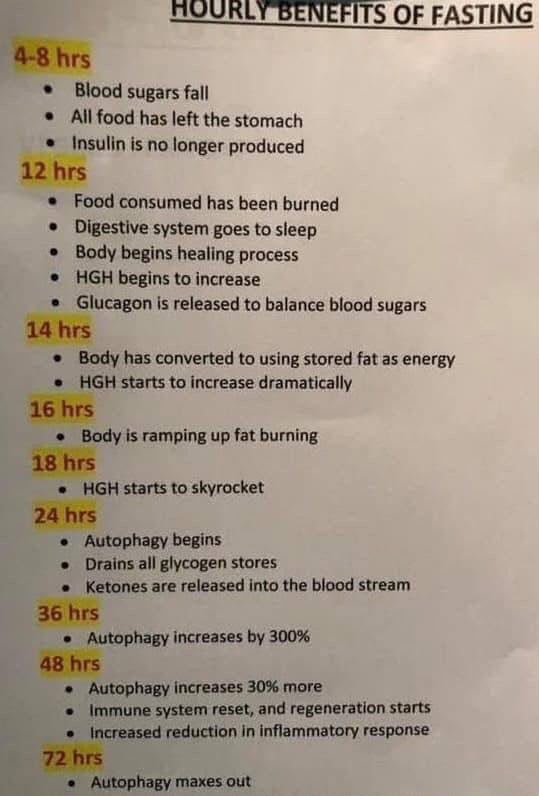
- Fasting Activates Autophagy
One of the most fascinating biological processes associated with fasting is autophagy.
Autophagy is essentially the cell’s recycling and housekeeping system.
Cells can identify damaged or unnecessary components, break them down and recycle some of their building blocks.
This process contributes to cellular maintenance and quality control.
Fasting can activate pathways involved in autophagy, although scientists are still studying exactly how much autophagy occurs in humans and how it varies according to fasting duration and individual circumstances.
- Fasting May Support Cell and Tissue Repair
Fasting can trigger changes in cellular signaling and metabolic pathways involved in maintenance and repair.
During periods without food, the body is not continuously processing incoming nutrients. This creates a different metabolic environment in which cellular maintenance processes may become more active.
Research is investigating how fasting may influence cellular repair, stress resistance and tissue maintenance.
This is one reason fasting has attracted attention in research on long-term health and healthy aging.
- Fasting May Support Healthy Aging
Aging involves many biological processes, including cellular damage, metabolic changes and gradual deterioration of cellular maintenance systems.
Because fasting can influence pathways related to autophagy, metabolism, inflammation and cellular stress responses, researchers are investigating whether fasting could contribute to healthier aging.
The goal is not simply to live longer, but to maintain good physical and cognitive function as we grow older.
- Fasting May Improve Brain Function
The brain requires a continuous supply of energy, but it can use different fuels.
During fasting, the body produces more ketone bodies, which can serve as an alternative energy source for the brain.
Fasting-related metabolic changes may influence brain signaling, neuronal resilience and processes involved in learning and memory.
Some people also report greater mental clarity while fasting.
However, this experience differs between individuals. Someone who is dehydrated, undernourished or not accustomed to fasting may instead experience headaches, irritability or brain fog.
- Fasting May Help You Think Clearly and Stay Calm
For some people, fasting creates a feeling of mental clarity.
There may be fewer distractions related to eating, snacking and constantly deciding what to consume.
Fasting can also teach a person to observe hunger without immediately reacting to it.
Over time, this may help some people develop greater awareness of their body’s signals and greater control over impulsive eating ( eating suddenly or without thinking, often because of emotions, habits, cravings, or temptation rather than true physical hunger).
However, severe hunger, dehydration or inadequate nutrition can have the opposite effect and impair concentration.
- Fasting May Help Regulate Mood and Stress Tolerance
Fasting can be a psychological exercise as well as a metabolic one.
Hunger is uncomfortable, but learning to experience temporary discomfort without immediately responding to it can help some people develop discipline and greater tolerance for discomfort.
Some people report feeling calmer and more emotionally controlled after adapting to a fasting routine.
Fasting may also influence biological pathways involved in brain signaling and the body’s stress response, although the effects on mood vary considerably between individuals.
Fasting should not, however, be considered a treatment for depression, anxiety or other mental-health conditions.
- Fasting Can Encourage Self-Awareness and Self-Discipline
Fasting can change the way we think about food.
It encourages us to ask:
“Am I actually hungry, or am I eating because it is simply time to eat?”
It can reveal how often we eat because of boredom, stress, habit or social pressure rather than genuine hunger.
For some people, this creates a deeper understanding of their relationship with food and their own impulses.
This experience can contribute to greater self-awareness, discipline and what some people describe as self-enlightenment.
- Fasting May Support Immune Function
The relationship between fasting and the immune system is an active area of scientific research.
Some studies suggest that fasting may help regulate immune function by influencing inflammation, immune-cell activity, cytokine signaling, oxidative stress and cellular recycling processes such as autophagy.
A healthy immune system requires adequate nutrition, protein, vitamins, minerals, sleep and overall good health.
How to Fast Effectively
The goal of fasting should not be to see how long you can survive without food.
Effective fasting is about creating a healthy balance between periods of eating and periods of not eating.
- Hydration Is Key
Water is essential during fasting.
Adequate hydration supports circulation, kidney function, temperature regulation, concentration and normal cellular processes.
However, drinking excessive amounts of water is not better. Too much water can dilute sodium in the blood and cause dangerous electrolyte disturbances.
Aim to consume 3 to 4 litres of water daily.
- Pay Attention to Electrolytes
Electrolytes such as sodium, potassium and magnesium are important for fluid balance, nerves and muscles.
For people doing longer fasts or sweating heavily, electrolyte balance deserves particular attention.
Salted water can provide sodium, but it does not provide all electrolytes. People with kidney disease, heart conditions or certain medications should be particularly cautious with additional sodium and should seek medical guidance.
- Eat Nutritious Food
Fasting does not make an unhealthy diet healthy.
When you break your fast, prioritize nutrient-dense whole foods.
Good choices include:
- Protein such as eggs, fish, meat, chicken, beans and lentils
- Healthy fats such as avocado, nuts, pumpkin seeds, tallow and olive oil.
- Vegetables, especially a variety of leafy and green vegetables such as sukumawiki, pumpkin leaves, cabbage, broccoli and others.
- Whole-food carbohydrates such as sweet potatoes, legumes, arrowroots, cassava, green bananas and whole grains.
- Adequate fluids and essential nutrients such as bone broth and mala.
The quality of the food you eat during your eating period is just as important as the length of your fasting period.
- Start Gradually
You do not have to begin with an 18-, 20- or 24-hour fast.
If you are new to fasting, beginning with a 16-hour fast may be more comfortable. You can gradually adjust the fasting period according to your goals and how your body responds.
Longer fasting is not automatically better.
Your consistency matters.
- Listen to Your Body
Some hunger is normal during fasting.
Severe dizziness, fainting, confusion, persistent vomiting, extreme weakness, severe headache, palpitations or other concerning symptoms should not simply be ignored in the name of fasting.
Fasting is also not appropriate for everyone. People who are pregnant or breastfeeding, children and adolescents, people with certain medical conditions, and people taking medications that affect blood sugar or blood pressure should seek appropriate medical advice before fasting.
Fasting is not simply about eating less.
It is about giving the body periods in which it can transition between different metabolic states.
During fasting, insulin levels generally fall, stored energy becomes more important, metabolic flexibility may improve, and cellular pathways involved in maintenance and recycling can be influenced.
At the same time, fasting may support healthy weight management, insulin sensitivity, inflammatory regulation, brain health and healthy aging.
But fasting works best as part of a bigger lifestyle.
Eat nourishing food. Stay hydrated. Move your body. Sleep well. Manage stress. And give your body appropriate periods without food when fasting is safe for you.
The goal is not to punish the body by withholding food.
The goal is to understand the body, work with its natural metabolic processes and build a healthier relationship with food.
Fasting is not about starving the body. It is about learning when to eat, what to eat, and when to give the body a break.